Resilient and Smart Infrastructure Systems (RESIS)
Decision Support System for Crisis Management
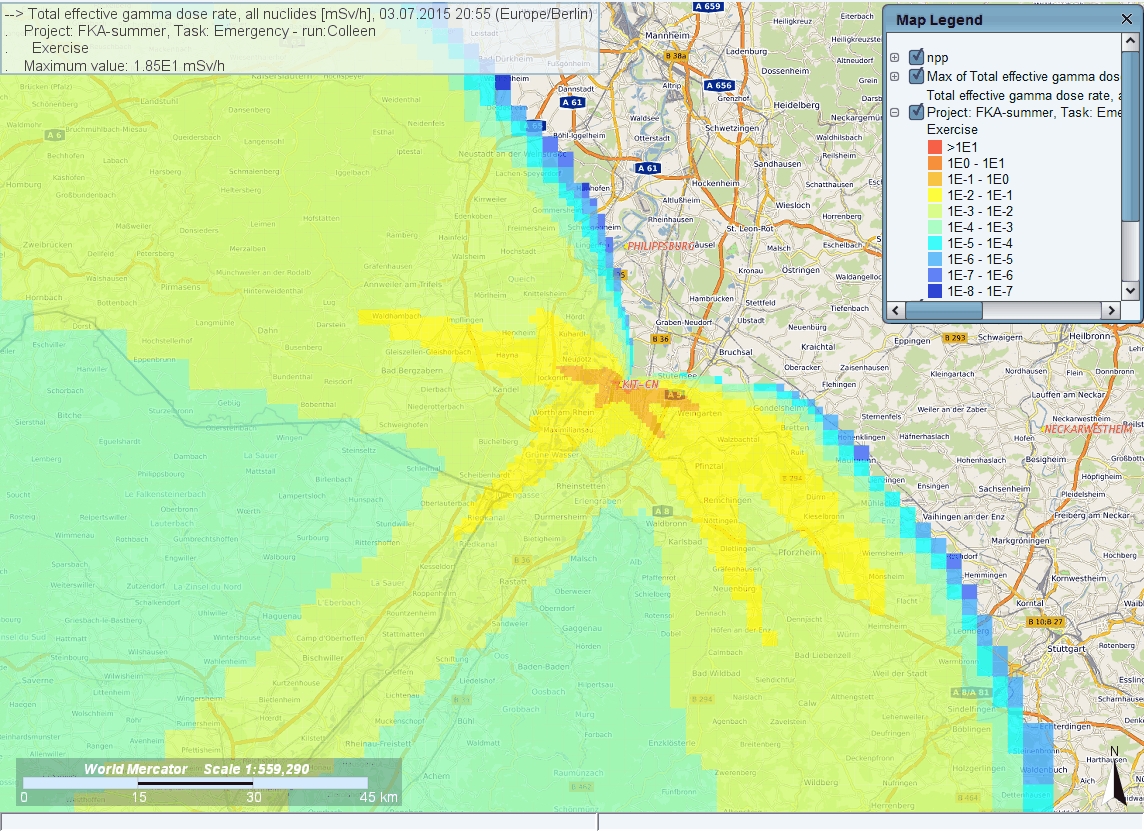
- Decision Support System for nuclear accidents (JRODOS)
- Dynamic Measure Development for Crisis Management
Resilience of modern Supply Systems
- Concepts, models and algorithms for the design and (real-time) operation of critical infrastructures to increase their resilience and safety in the sense of security of supply – urban Resilience/Resilience of individual infrastructures: Smart Energy Systems, Water Supply, Transport Systems, Healthcare System etc.
- Development of suitable operationalizable resilience metrics to increase the adaptability and elasticity of critical infrastructures
Contact: Dr. rer. nat. Sadeeb Simon Ottenburger
 |
 |
|
| JRODOS: Dispersion calculation | Concepts, methods for analyzing and improving the resilience of critical infrastructures |
SWR Science Talk:
The future of urban supply of goods and energy
How can critical infrastructure be made sustainable and resilient? Dr. Sadeeb Simon Ottenburger is researching ways to avert potential dangers.
NEWS:
New Publication in the Renowned Mathematics Journal Mathematische Annalen
Dr. Sadeeb Simon Ottenburger, mathematician and systemic resilience researcher in the RESIS (Resilient and Smart Infrastructure Systems) department at the Institute for Thermal Energy Technology and Safety (ITES), has published a new research paper in the renowned mathematics journal Mathematische Annalen.
The paper entitled
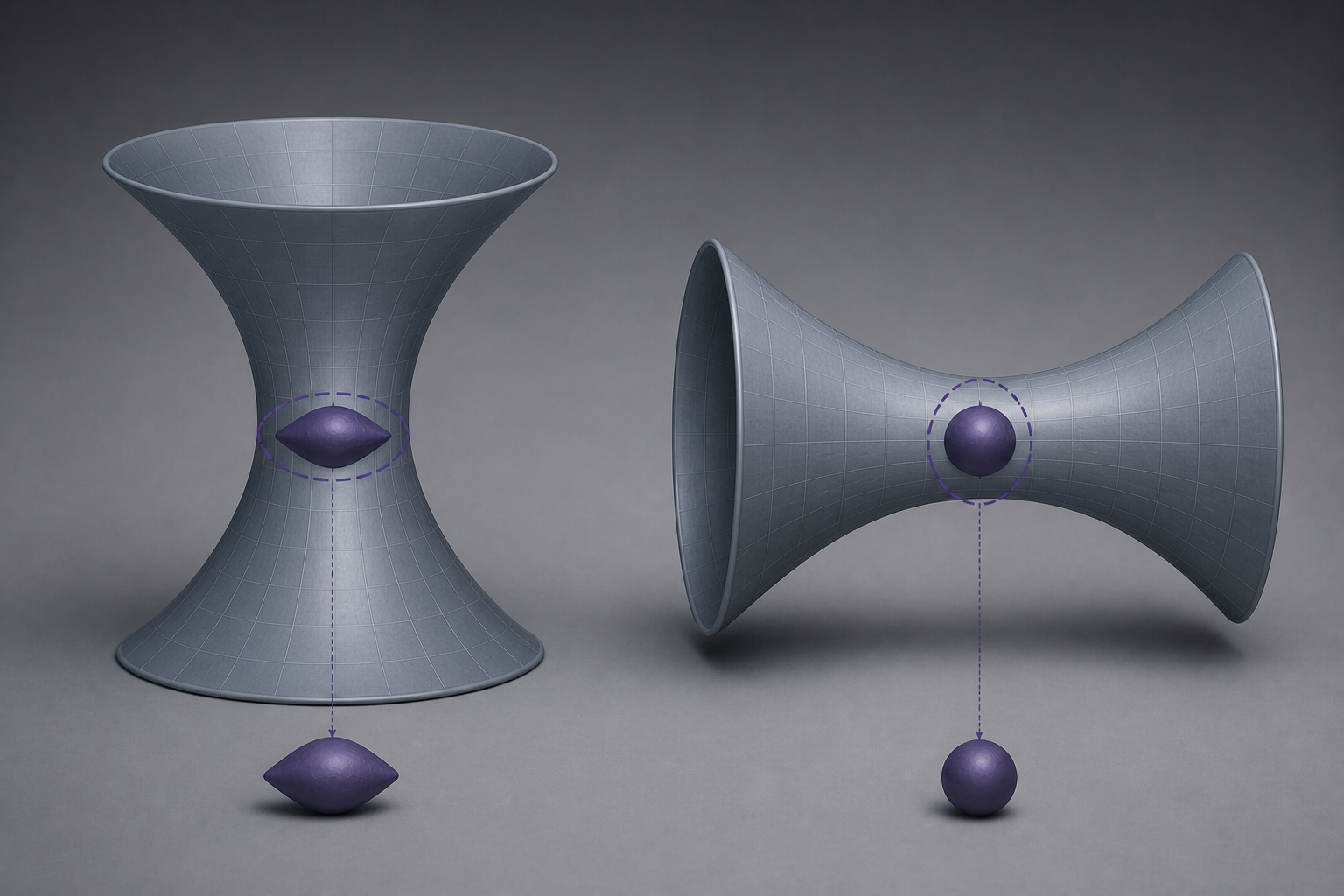
“A classification of 5-dimensional manifolds, homogeneous souls of codimension two and non-diffeomorphic pairs” presents new results in the classification of five-dimensional manifolds.
By revisiting well-known geometric spaces from a different perspective, the study reveals previously unnoticed phenomena and resolves two open questions formulated in earlier journal publications.
The work analyzes structural invariants and explores the range of admissible shapes under given conditions. It shows how spaces can deform under certain conditions while preserving their essential structural properties.
This structural perspective also informs Dr. Ottenburger’s current research in the RESIS department at ITES. In this context, a closely related challenge arises: Which properties and interrelations are critical for the stability of complex systems, and how can they be described mathematically?
The aim of this research is to understand how systems can adapt or transform under stress without losing their core capabilities. Alternative system designs may differ fundamentally in their structure while still performing the same critical functions.
Bringing together mathematical structure theory and applied resilience research opens new perspectives for understanding complex technological and societal systems.